
In Brief
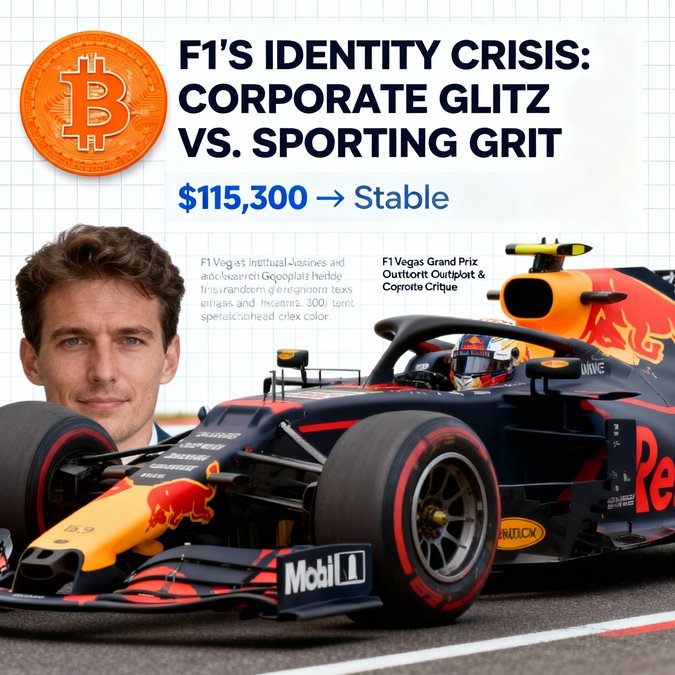
- This week, Formula 1 grappled with its identity, balancing a burgeoning corporate spectacle with the foundational elements of pure racing competition and team integrity, notably highlighted by the upcoming Las Vegas Grand Prix.
- Red Bull demonstrated a clear path to sustained success through its meticulous junior driver pipeline and proactive succession planning, exemplified by young talent Arvid Lindblad, setting a benchmark for future F1 dominance.
- In stark contrast, Ferrari’s persistent underperformance was attributed to internal corporate interference over sporting sense and a significant engineering talent drain, leading to rising fan disillusionment.
- The tension between commercial interests and core sporting objectives will undoubtedly shape upcoming championship battles, rewarding teams with genuine sporting vision and strong internal cohesion.
Deep Analysis
The 2025 Formula 1 season continues to unfold as a fascinating study in contrasts, particularly as the paddock prepares for the highly anticipated Las Vegas Grand Prix. This weekend’s race, framed as a potentially decisive moment in the championship battle, also serves as a stark illustration of F1’s dual nature: a thrilling sporting contest increasingly intertwined with a burgeoning corporate spectacle. As Formula Duck aptly notes at 0:36, the Las Vegas event is likely to “decide the title,” with specific scenarios for Lando Norris, Max Verstappen, and Oscar Piastri laid out at 0:44, where a Norris win could seal the championship, or a DNF could reopen the fight. This high-stakes drama on track exists against a backdrop of increasing commercialization, which, while lucrative, sometimes risks alienating the sport’s core fanbase.
Indeed, the corporate influence on F1 is not always met with universal acclaim. The analysis highlights a growing trend of corporate strategies in F1 often perceived as inauthentic, impacting the race weekend experience and team management decisions. This tension between commercial interests and the sport’s core racing integrity is exemplified by critiques of ‘inauthentic corporate audience engagement’ surrounding events like the Vegas GP. A particularly salient example from the video analysis is the failed Sky Sports “Halo” initiative, which the creator criticizes at 7:29 for its “degrading” and stereotypical approach to attracting a female audience. Such missteps underscore a disconnect between corporate marketing efforts and the genuine passion of F1 fans, reflecting broader ‘corporate interference over sporting sense’ that can permeate the sport, as discussed in the broader market narrative.
This corporate influence is not merely external; it deeply impacts the internal dynamics of F1 teams, acting as a key differentiator in performance. Ferrari’s sustained underperformance, for instance, is attributed significantly to internal dysfunction. The in-depth analysis from Formula Duck,
Micro Analysis
In an era where Formula 1’s competitive landscape is defined by increasingly marginal gains, the strategic importance of nurturing internal talent cannot be overstated. Red Bull Racing stands as a prime example, demonstrating that a robust junior driver pipeline is not merely a bonus, but a cornerstone of long-term competitive strategy and proactive succession planning. This approach provides a continuous supply of highly skilled drivers, minimizing reliance on the external, often volatile, driver market and fostering a deep understanding of the team’s culture and technical philosophy from a young age.
The case of Arvid Lindblad epitomizes Red Bull’s philosophy. As highlighted by Formula Duck, Lindblad is explicitly seen by Red Bull as their ‘next Max Verstappen’ at 2:50, indicating a clear succession plan for their star driver. Lindblad’s ‘generational’ raw pace and remarkable adaptability, noted at 7:26, are critical attributes. His ability to quickly understand and master any car, often within ‘three corners’ at 10:46, is a deadly asset, especially with the seismic F1 regulation changes looming in 2026. This innate talent allows him to rapidly maximize performance, a trait invaluable in a sport where driver feedback and quick adaptation are paramount.
Red Bull’s program, while ruthless, as the video’s discussion of the ‘second Red Bull seat curse’ at 1:02 suggests, is fundamentally about identifying and relentlessly developing talent. It’s a stark contrast to teams that struggle with ‘engineering talent drain’ and ‘corporate interference,’ which often stifle internal growth and innovation. By investing heavily in feeder series and offering clear pathways to F1, Red Bull ensures a steady influx of drivers who are not only quick but also intimately familiar with the demands and pressures of a top-tier F1 team. This strategic foresight provides a competitive advantage that extends far beyond a single race weekend, securing the team’s future dominance regardless of current driver lineup changes, as discussed in the article Red Bull’s Intensified Focus on Junior Driver Pipelines.
This continuous talent pipeline, both for drivers and engineers, is increasingly paramount for sustained success. Red Bull’s model underscores how deep internal development and succession planning create resilience against external pressures and ensure the team remains at the pinnacle of motorsport. For other teams looking to challenge for championships, building a similarly robust and adaptable talent pathway will be a critical forward indicator of their future competitiveness, requiring significant investment in feeder series and fostering an environment where talent can truly thrive.
Macro Analysis
The impending Las Vegas Grand Prix not only brings the championship battle to a fever pitch but also intensifies the focus on several critical cross-domain developments shaping the future of F1. The balance between commercial growth and sporting integrity, a central theme this season, will be under intense scrutiny. Fan sentiment and attendance at commercially driven races like Vegas in future iterations will indicate the long-term acceptance of F1’s current commercial strategy, as further explored in F1 Vegas Grand Prix: The Spectacle vs. The Sport.
On the sporting front, the performance trajectory of Red Bull’s junior drivers, particularly Arvid Lindblad, will be a key benchmark for talent development across the grid. His integration into future F1 lineups will demonstrate the efficacy of Red Bull’s ‘proactive succession planning,’ a model other teams are surely studying. Any concrete steps taken by Ferrari to address its identified ‘corporate interference’ and ‘engineering talent drain’ will also be crucial forward indicators. Changes in team leadership structures and their ability to resist external or internal corporate pressures will directly impact competitive outcomes and championship prospects, with direct implications for next year’s constructor’s battle and Charles Leclerc’s aspirations. These dynamics will continue to define the championship landscape beyond the immediate thrill of the Vegas race.
Trend Analysis
As the F1 season progresses, several weak signals warrant close monitoring for their potential long-term impact on the sport. Firstly, watch closely how other F1 teams navigate the tension between corporate demands and sporting priorities. Any shift in team sponsorship strategies or public engagement that prioritizes authenticity over pure commercial gain could signal a wider recalibration within F1’s commercial approach. Secondly, the trajectory of Red Bull’s junior drivers in feeder series, particularly the nuanced performance of Arvid Lindblad, will be vital. His F2 and F3 results, beyond mere statistics, will need to be analyzed for signs of adaptability and raw pace, rather than just championship wins, due to the ‘Mecachrome lottery’ and financial disparities mentioned by Formula Duck at 9:37. Finally, observe any internal restructuring or strategic appointments within Ferrari. Genuine attempts to empower engineering autonomy and curb ‘corporate interference,’ as detailed in Ferrari’s Folly: Internal Dysfunctions Undermining F1 Hopes, would indicate a potential shift away from their current struggles. These subtle indicators could foreshadow significant changes in team competitiveness and the broader F1 narrative in coming seasons.
Your Moves
- Pay close attention to driver adaptability, particularly in changing conditions or new car concepts, as a critical indicator of long-term F1 potential beyond raw speed.
- Analyze team leadership statements and personnel movements for signs of genuine commitment to sporting integrity versus corporate objectives, especially at Ferrari.
- When evaluating junior drivers, look beyond championship standings to assess raw pace, consistency, and adaptability, understanding the ‘Mecachrome lottery’ factor in feeder series.
- For fantasy league players, consider the impact of internal team dynamics and corporate influences on a team’s long-term performance, not just immediate results.
- Observe the evolution of F1’s commercial strategies at races like Las Vegas; fan reception will indicate the sport’s sustainable growth trajectory.
Summary
Based on the analysis above, readers should focus on monitoring institutional adoption patterns, regulatory developments, and cross-asset correlations as key indicators for the next phase of market evolution. The convergence of traditional finance infrastructure with crypto assets represents a fundamental shift that demands careful attention to both opportunities and risks.
Sources & Citations
- F1 Vegas Grand Prix: The Spectacle vs. The Sport
- Red Bull’s Intensified Focus on Junior Driver Pipelines
- Ferrari’s Folly: Internal Dysfunctions Undermining F1 Hopes
- My Weekend Preview + Predictions For The 2025 F1 Vegas Grand Prix
- Arvid Lindblad Is The Future Of Red Bull F1
- My 13 Reasons Why Ferrari Have ACTUALLY Failed This Year In F1
Estimated read time: 12 minutes
Quality score: 0.90
This newsletter was generated using AI analysis.
Leave a Reply