
Food & Dining
What’s the real value of a meal? This week’s selections explore that question from every angle, taking on a £44 fish & chips that fails the test, a tax policy that makes donating food more expensive than trashing it, and a journey that finds unexpected quality in motorway service stations.

I Review The UK’s Most Expensive Chippy – Terrible Experience!
Price vs. Quality Disconnect: The central focus of the video is the massive disparity between the premium price of the food and its perceived low quality. The reviewer repeatedly expresses shock and disappointment that the UK’s ‘most expensive chippy’ serves mediocre food.
“Do you know what? If that was free, that’d be too expensive. Seriously.”
Gary Eats · 291,407 views · 11,827 likes · 2,584 comments
References:
– Full video
– Jump to key moment
– Channel: Gary Eats

Giving free food is expensive 🙃
Perverse Financial Incentives in Food Donation: The video’s central argument is that the UK’s VAT system financially penalizes businesses for donating surplus food, making it cheaper to throw it away. This creates a direct disincentive for pro-social behavior.
“If they put them in the bin, they don’t have to pay the VAT back to the government.”
Gavin Wren · 13,949 views · 766 likes · 31 comments
References:
– Full video
– Jump to key moment
– Channel: Gavin Wren

Living on the Motorway Network for 3 Days
The Surprising Nature of Mundane Spaces: The video’s central theme is the discovery that motorway service stations, typically seen as purely functional and inconvenient, often hide beautiful natural spaces like lakes, parks, and walking trails. This challenges the conventional perception of such infrastructure.
“This whole trip has completely changed my perception of service stations. I saw them as an inconvenience because you have to come off the motorway. It slows me down.”
Gavin Wren · 4,738 views · 227 likes · 46 comments
References:
– Full video
– Jump to key moment
– Channel: Gavin Wren
Travel
What happens when you flip the script on a Pyramid scammer? Or when a total novice tries to build a pro-level snow shelter? This week’s selections challenge our travel preconceptions, from the truth behind a geopolitical tragedy to the surprising reality of a notorious tourist trap.

The Tragic Case of Otto Warmbier
The Perils of ‘Dark Tourism’: The video implicitly critiques the ‘dark tourism’ industry through the portrayal of Young Pioneer Tours. The agency’s marketing of North Korea as ‘extremely safe’ and a destination ‘your mother would rather you stay away from’ highlights a dangerous trivialization of the real risks involved in visiting totalitarian states.
“The tour operator specializes in taking you to destinations your mother would rather you stay away from.”
fern · 614,365 views · 24,545 likes · 3,193 comments
References:
– Full video
– Jump to key moment
– Channel: fern
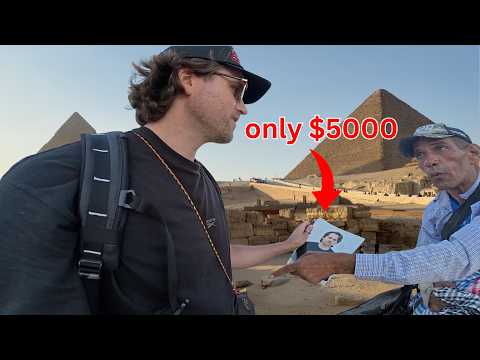
Scamming the Scammers at the Pyramids
Inverting the Scam: The central premise of the video’s second half is the host turning the tables on common tourist scammers. Instead of being a victim of the ‘free gift’ tactic, he proactively offers his own absurd ‘free’ items (headshots, CDs) to confuse and disarm the scammers.
“You want a photo? Here, take my headshot. Here. This is my gift for you. Free.”
Small Brained American · 391,084 views · 16,306 likes · 2,055 comments
References:
– Full video
– Jump to key moment
– Channel: Small Brained American

I Made An Outdoor Boys style Snow Shelter
The Novice’s Journey and Authenticity: The creator consistently emphasizes her lack of experience, physical strength, and background, positioning herself as a relatable ‘ordinary person’. This authentic, vulnerable approach to a difficult challenge fosters a strong connection with the audience.
“I’m from the south, southern part of China, so snow is actually not a very, um, ordinary stuff for me.”
Imalittlemole · 11,260 views · 1,422 likes · 233 comments
References:
– Full video
– Jump to key moment
– Channel: Imalittlemole
Culture
How do we say goodbye? One pair of artists walked the Great Wall of China to end their relationship, while an exiled novelist looks back at the city he lost. A third video asks what we’re losing by turning to AI for comfort.

Marina Abramović and Ulay on ‘The Great Wall Walk’ (1988)
The Symbiosis of Art and Life: The performance piece is a direct translation of the artists’ personal life—the end of their romantic relationship—into a large-scale, public work of art. Their separation is not just the context but the content of the work.
“But after eight years, the finally Chinese give us permission. This was actually ending our relationship.”
Louisiana Channel · 2,353 views · 88 likes · 5 comments
References:
– Full video
– Jump to key moment
– Channel: Louisiana Channel

Writer Alaa Al-Aswany: The Secret of Cairo
Cairo as a Living Archive of Human History: The video posits that Cairo is not merely a physical city but a dense repository of human experiences, memories, and stories embedded within its buildings and streets. Al-Aswany argues that every space is ‘full of human history,’ making the city itself a primary character and a source of endless literary inspiration.
“And I said to myself, this room is full of human history, and I can easily imagine that in this room there was a wedding night, or a divorce negotiations, or even somebody committed suicide.”
Louisiana Channel · 3,547 views · 162 likes · 7 comments
References:
– Full video
– Jump to key moment
– Channel: Louisiana Channel

One Third Use AI for Emotional Support
AI as a Symptom of a Failing Mental Health System: The video argues that the widespread use of AI for emotional support is not a standalone trend but a direct consequence of an overburdened, underfunded, and inaccessible public mental healthcare system, particularly the NHS in the UK.
“So real treatment is only for the rich, while the rest of us peasants have to wait months for a therapist with NPC eyes due to severe strain.”
Coolea’s Cave · 2,213 views · 187 likes · 39 comments
References:
– Full video
– Jump to key moment
– Channel: Coolea’s Cave
Connections Across Domains
Beneath the surface of everyday life, invisible systems connect seemingly unrelated phenomena. A traveler in Cairo navigating tourist scams is experiencing the outer layer of a city that an exiled author describes as a deep, living archive of political history; the friction between these two views reveals how the travel economy can obscure a place’s true soul. This pattern, where symptoms mask systemic roots, appears again in the UK. On one hand, tax policy paradoxically encourages food waste; on the other, citizens turn to AI for mental health support, filling a void left by an overstretched system. Both cases show how unseen economic and political structures create tangible, often perverse, outcomes in our daily lives, from what we eat to how we feel.
Cairo (travel, culture)
The friction between a traveler’s surface-level experience (navigating scams) and a location’s deep cultural and political identity reveals a fundamental tension in modern tourism, showing how the visitor economy can obscure the lived reality of a place.
UK Government (food, culture)
Seemingly disconnected issues—tax policy hindering food donations and citizens turning to AI for emotional support—are both downstream effects of systemic governance gaps, revealing how invisible policy decisions create tangible, often perverse, outcomes in separate social spheres.
Sources
- I Review The UK’s Most Expensive Chippy – Terrible Experience! — *Gary Eats *
- Giving free food is expensive 🙃 — Gavin Wren
- Living on the Motorway Network for 3 Days — Gavin Wren
- The Tragic Case of Otto Warmbier — fern
- Scamming the Scammers at the Pyramids — Small Brained American
- I Made An Outdoor Boys style Snow Shelter — Imalittlemole
- Marina Abramović and Ulay on ‘The Great Wall Walk’ (1988) — Louisiana Channel
- Writer Alaa Al-Aswany: The Secret of Cairo — Louisiana Channel
- One Third Use AI for Emotional Support — Coolea’s Cave
9 videos across 3 domains
Generated: 2026-01-12 13:31 UTC
This newsletter was generated using AI analysis.
Leave a Reply